

The Journal
Cold-Pressed, Refined or Unrefined: Does It Matter in Skincare?
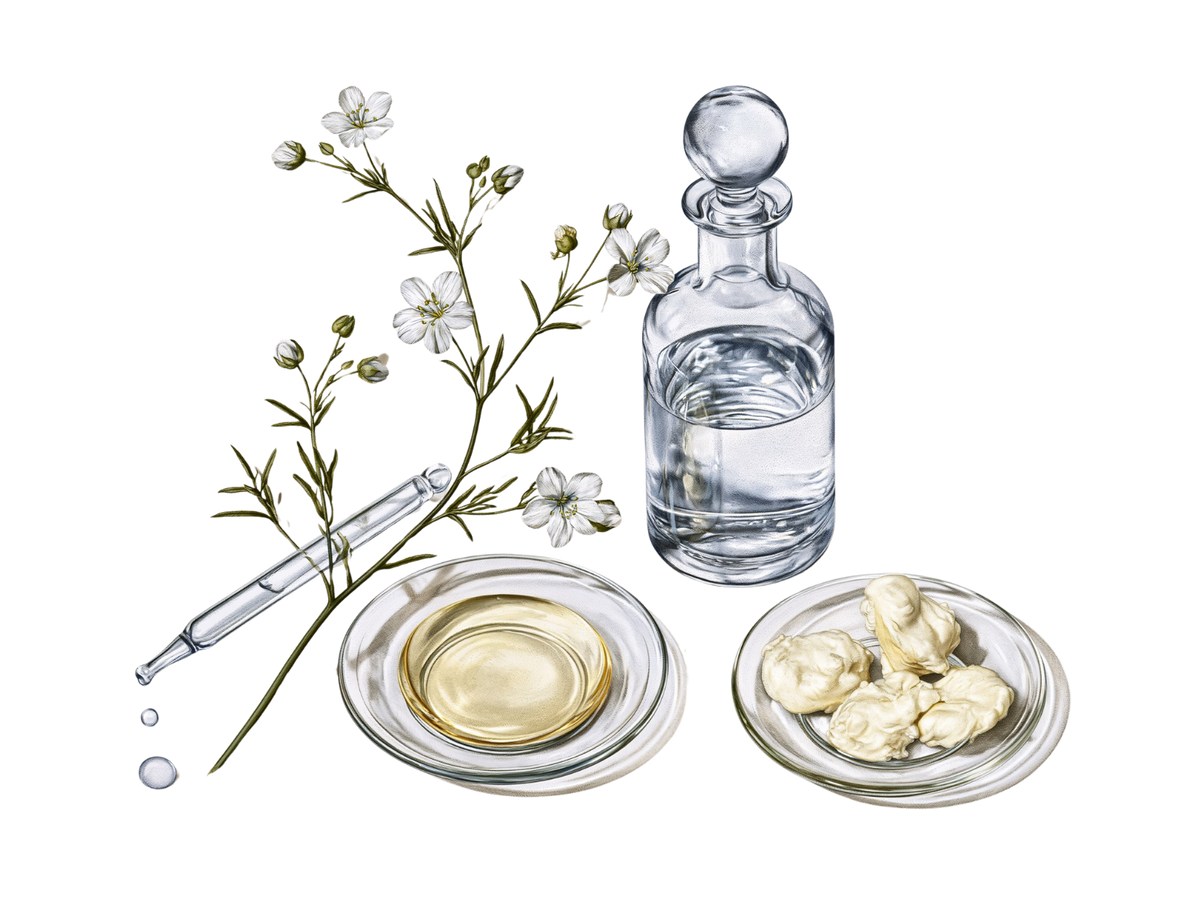
Cold-pressed, refined, unrefined — botanical oil labels can make one ingredient sound better than another. But what do these descriptions actually mean? Discover how processing affects an oil's color, scent, and character, and why the least processed option isn't always the best choice for your skin
VOL. 2 · NO. 007
5-minute read
Pick up two bottles of botanical oil and you might find that one proudly announces cold-pressed on the label, while the other says refined. A third might be described as unrefined, virgin, or minimally processed.
If you've ever wondered whether you're supposed to know the difference, you're in good company.
These descriptions can make one oil sound wonderfully pure and another somehow less desirable. And when you're choosing something to put on your skin, it's natural to want the version that offers the most.
But those little words on the label tell a more interesting story than simply good versus bad. They describe how an oil was obtained and what happened to it afterward. Understanding that difference can make shopping for skincare a great deal easier.
What Those Labels Are Actually Telling You
Let's start with cold-pressed.
Many botanical oils come from seeds, nuts, or fruit kernels. Cold-pressing uses mechanical pressure to release the oil without deliberately applying high heat during extraction. Friction can still generate warmth, so cold-pressed doesn't necessarily mean the oil was never warm.
The appeal is understandable. Gentler processing can preserve more of the plant's original character, including its natural scent, color, and some of the compounds that make botanical oils interesting.
Unrefined describes something slightly different. It means the oil hasn't undergone the more extensive processing used to remove certain naturally occurring substances. An unrefined oil may still be filtered or settled to remove bits of plant material.
And refined? That simply means the oil has received additional processing, often to make its color, scent, and overall character more consistent.
Here's a distinction worth remembering: cold-pressed describes how an oil was extracted. Refined or unrefined describes what happened afterward.
An oil can be cold-pressed and then refined. The terms aren't opposites, even though skincare labels sometimes make them seem that way.
What Gets Lost — and What Gets Better?
Imagine opening a bottle of rich, golden botanical oil with a distinctive nutty or earthy scent. Much of that character comes from substances naturally present alongside the oil itself.
Depending on the plant, these may include pigments, aromatic compounds, and antioxidants such as vitamin E.
Some of these substances are valuable. Others can make an oil less appealing to use, especially if the smell is strong or the color transfers onto clothing.
Refining can soften or remove those characteristics. It may also reduce unwanted impurities or compounds associated with deterioration.
There's a tradeoff, though. Some naturally occurring antioxidants and other interesting plant compounds can be reduced during processing, too.
That doesn't mean the refined oil has been emptied of everything worthwhile.
The main portion of a botanical oil is still made up of fats that contribute to its skin-conditioning properties. Refining generally doesn't erase that foundation.
And removing some of the oil's original character can make it easier to use in a thoughtfully balanced skincare product.
Consider a facial oil with several botanical ingredients. One strongly scented, deeply colored oil could overwhelm everything else. A more neutral version might allow the finished product to feel elegant and pleasant without sacrificing the qualities that made the oil useful in the first place.
Sometimes less of the plant's original character is exactly what a formulation needs.
Is Unrefined Oil Better for Your Skin?
Not automatically.
An unrefined oil may retain more of certain naturally occurring compounds, and that can be a genuine advantage. But finding more antioxidants in an oil doesn't necessarily mean a finished skincare product will deliver better results.
Much depends on which compounds are present, how much survives processing and storage, and how the oil is used.
There's also the matter of comfort.
A beautifully fragrant botanical oil may delight one person and be unwelcome on another's sensitive skin. Natural scent compounds aren't automatically irritating, but they aren't automatically gentle either.
A refined version with less odor may be the more comfortable choice.
Color deserves similar consideration. A deep green or brilliant orange oil can be beautiful, but the color alone tells us very little about how well it will care for skin.
And then there's freshness. An unrefined oil isn't necessarily less stable, just as a refined oil isn't guaranteed to last longer. Much depends on the plant's natural oil composition, the quality of the starting material, processing, storage, and exposure to heat, light, and air.
Neither description offers a shortcut around those considerations.
Why the Oil Itself Matters More Than the Label
Here's where the conversation becomes especially interesting.
Two different botanical oils can both be cold-pressed and unrefined, yet feel remarkably different on skin.
One may be light, silky, and quick to spread. Another might feel rich and substantial, leaving a noticeably protective finish.
Those differences come largely from the oils themselves, not the attractive wording on their labels.
The balance of fatty acids varies from plant to plant, helping explain why some oils feel lighter while others have a richer character. Other naturally occurring substances contribute to their scent, appearance, and distinctive qualities.
That means choosing a botanical oil involves more than deciding how little processing sounds desirable.
At Rowan & Thistle, we value botanical ingredients for their individual qualities and what they can contribute to a finished product. Minimal processing can be appealing, but it isn't a requirement we would place above comfort, stability, or the experience of using the product.
A well-chosen refined oil can be every bit as intentional as an unrefined one.
A Little More Confidence at the Skincare Shelf
So what should you look for when comparing botanical oils?
Start with the oil itself. What plant does it come from? Is it known for a light feel or a richer finish? Does its natural scent appeal to you? Are you choosing a single oil or a finished product containing several ingredients?
Then consider what the processing description adds.
Cold-pressed may tell you something useful about extraction. Unrefined may suggest that more of the oil's original character remains. Refined may indicate a more neutral, consistent ingredient.
None of these words can tell you, on its own, whether the oil is fresh, well sourced, comfortable for your skin, or especially effective.
And if a brand doesn't explain its processing choices, it's perfectly reasonable to ask.
Beautiful skincare doesn't have to begin with the least processed ingredient available. Sometimes the most thoughtful choice is preserving what nature provided. Sometimes it's gently removing what gets in the way.
The real value lies in understanding the difference — and knowing that a label is only the beginning of the story.
Notes & Sources
For readers who enjoy looking a little further into the subject:
1. Gharby, S. (2022). Refining Vegetable Oils: Chemical and Physical Refining. The Scientific World Journal. An overview of how refining changes an oil's composition, appearance, odor, and quality.
2. Cold pressed oils: a systematic review on physicochemical properties, nutritional composition and pharmacological activities (2026). Frontiers in Nutrition. Explores cold-pressed extraction, naturally occurring plant compounds, and factors influencing oil stability.
3. Color Reversion of Refined Vegetable Oils: A Review (2023). Full article. Examines pigments and other compounds affected by refining, including how processing influences an oil's appearance and quality.
These references largely concern vegetable-oil chemistry and processing. They help explain differences between oils, but do not establish that one processing method consistently produces better skincare results.
Continue Exploring
From the Rowan & Thistle Journal:
- Vol. 1, No. 002 — What Does Oil Actually Do for Your Skin? A closer look at what botanical oils contribute to skin comfort and softness.
- Vol. 2, No. 002 — What Makes Plum Kernel Oil So Interesting for Skin? A look at the qualities that make one botanical oil different from another.
- Vol. 2, No. 006 — Why Do Some Botanical Oils Stay Fresh Longer Than Others? Why freshness involves much more than whether an oil is refined or unrefined.