

The Journal
Shampoo Bars vs. Soap: What's the Difference?
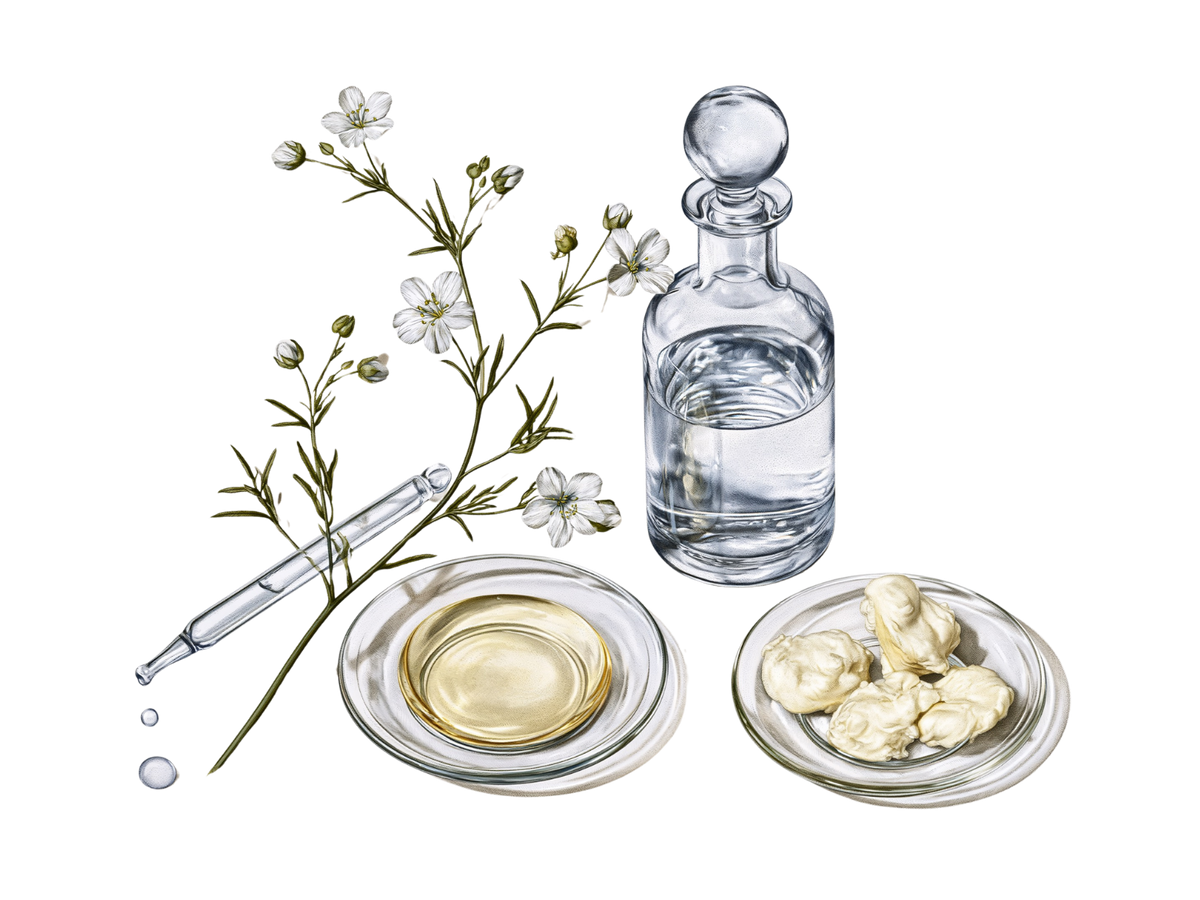
Not every bar labeled “shampoo” is actually shampoo. Some are handmade soaps with a few appealing botanical ingredients added. Here’s why that distinction matters, how pH affects your hair, and what to look for when choosing a shampoo bar.
ROWAN & THISTLE JOURNAL | VOLUME III · NO. 003
5 minute read
Not all shampoo bars are actually shampoo.
That may come as a surprise, especially if you've purchased a beautiful handmade bar advertised as a natural shampoo, perhaps one made with rosemary, nettle, or other botanicals known for their association with healthy hair.
It sounds promising. The ingredients are appealing, the packaging is lovely, and the idea of washing your hair without a plastic bottle makes perfect sense.
But there's something worth knowing before you buy: some of these so-called shampoo bars are simply handmade soap with a few additional ingredients. They may be beautifully crafted soaps, but adding rosemary to soap doesn't turn it into shampoo.
And for your hair, that distinction makes quite a difference.
It's Still Soap, No Matter What You Add to It
Handmade soap begins with oils or fats and an alkali, usually sodium hydroxide, commonly called lye. Through a process called saponification, those ingredients are transformed into soap.
It's a historic craft that is going strong today. The choice of oils, the balance between them, and the skill of the soap maker all influence the finished bar.
Some soap makers also add botanical extracts, essential oils, herbs, or specialty oils. These can bring lovely qualities to a soap, but they don't change its basic chemistry.
A bar made with olive oil, coconut oil, rosemary, and nettle is still soap. Even if the maker calls it shampoo.
The important difference isn't whether the ingredients are natural, handmade, or thoughtfully selected. It's how the bar actually cleans and how it behaves when it comes into contact with your hair.
And this brings us to something that doesn't receive nearly enough attention when shampoo bars are discussed: pH.
Why pH Matters More Than You Might Think
You probably remember the pH scale from school. It runs from 0 to 14, with 7 being neutral. Lower numbers are acidic; higher numbers are alkaline.
Traditional handmade soap is naturally alkaline, typically with a pH somewhere around 9 to 11. Some soaps measure close to 11, even when they've been carefully made and properly cured.
Your hair, on the other hand, prefers a much more acidic environment.
The surface of your hair is naturally acidic, and shampoos formulated around pH 4.5 to 5.5 are generally more compatible with keeping that surface smooth and manageable.
That's quite a difference.
To understand why it matters, picture the outside of a strand of hair. It's covered with tiny overlapping layers, rather like shingles on a roof. These layers are called the cuticle.
When the cuticle lies relatively smooth, your hair feels softer, reflects light more evenly, and is easier to comb.
Highly alkaline products can disturb that smooth surface, increasing friction between strands. Hair may become rough, tangled, frizzy, or more vulnerable to breakage.
And if your hair is colored, bleached, curly, or already dry, you may notice those effects more quickly and more dramatically.
Research on shampoo pH has found that higher alkalinity can contribute to increased friction and tangling, while lower-pH shampoos may help reduce those problems.
This doesn't mean that every shampoo must have exactly the same pH. But it does explain why a product with a pH approaching 11 isn't an ideal choice for regularly washing hair.
Why Soap Can Leave Hair Feeling Waxy
Here's where things can become especially frustrating.
You wash your hair with a handmade shampoo bar. It produces a lovely lather, smells wonderful, and seems to be doing its job.
Then you rinse.
Your hair feels oddly coated. Perhaps it seems heavy or sticky, or your fingers don't glide through it the way you're accustomed to.
There may be two things happening.
First, the alkaline soap can leave the hair's surface feeling rougher, making individual strands catch against one another.
Second, if you have hard water, the minerals in that water can react with soap and form deposits. It's a little like the soap scum that accumulates around a bathtub.
Except now, some of that residue may be clinging to your hair.
You can rinse and rinse, but the unpleasant feeling may remain.
Some soap-based shampoo makers recommend following with a diluted vinegar rinse to help counteract the effects of alkaline washing. While an acidic rinse may improve the feel of the hair, it doesn't change the fact that you've washed it with soap.
A well-formulated shampoo shouldn't require you to correct the effects of the cleansing product afterward.
So What Makes a Real Shampoo Bar?
A genuine shampoo bar is developed specifically for hair, using cleansing ingredients that don't depend on the traditional soapmaking process.
These are often called syndet bars, short for synthetic detergent. It's a rather unfortunate name, because it sounds much harsher than it needs to.
In this context, it simply means the bar uses prepared cleansing ingredients rather than soap. Some of those ingredients are made partly from plant-derived materials, including coconut.
More importantly, these ingredients give the formulator greater control over how the shampoo performs.
A shampoo bar can be developed with a mildly acidic pH, gentle yet effective cleansing, generous lather, and ingredients that help leave hair soft and manageable.
It can also be tailored to different hair types.
Fine hair may need a lighter approach than thick, textured hair. Dry hair may appreciate more conditioning, while hair that becomes oily quickly may need a different balance of cleansing ingredients.
A thoughtful formulator considers all of these things, rather than simply adding an appealing botanical to a soap recipe.
The solid format also has practical advantages. Because shampoo bars can be made without the water already present in bottled shampoo, they're concentrated, compact, and convenient for travel.
At Rowan & Thistle, that's how we approach shampoo bars: as hair care first, with the solid format offering an additional benefit.
How to Know What You're Buying
You don't need to understand every ingredient on a label to make a more informed choice.
Start by looking for the ingredients responsible for cleansing.
If you see names such as sodium olivate, sodium cocoate, or sodium palmate, and particularly sodium hydroxide you're likely looking at traditional soap.
If you see ingredients such as sodium cocoyl isethionate or sodium lauryl sulfoacetate, you're looking at cleansing ingredients commonly used in soap-free shampoo bars.
And if you're uncertain, ask the maker two simple questions: Is this a soap-based bar or a soap-free shampoo bar? And what is its pH when used with water?
A knowledgeable maker should be comfortable discussing both.
There's certainly a place for beautifully made soap. We make it ourselves, and appreciate the craftsmanship that goes into it.
But soap and shampoo have different jobs.
When choosing something to wash your hair, the attractive ingredients and lovely packaging are only part of the story. What matters most is whether the bar was actually designed for hair in the first place.
That's the difference worth knowing.
Notes & Sources
- Dias, M. F. R. G., et al. (2014). The Shampoo pH Can Affect the Hair: Myth or Reality? International Journal of Trichology. Explores the relationship between shampoo pH, friction, tangling, and hair breakage.
- Tarun, J., et al. (2014). Evaluation of pH of Bathing Soaps and Shampoos for Skin and Hair Care. Indian Journal of Dermatology. Examines the pH ranges of commercially available soaps and shampoos.
- Mijaljica, D., Spada, F., and Harrison, I. P. (2022). Skin Cleansing without or with Compromise: Soaps and Syndets. Molecules. Explains the differences in composition and pH between traditional soap and soap-free cleansing products.
Continue Exploring
From the Rowan & Thistle Journal
- Why Does My Hair Feel Waxy After Using a Shampoo Bar?
- What Makes a Cleanser Truly Gentle?
Explore Our Collections
- Rowan & Thistle Shampoo Bars — concentrated, soap-free shampoo bars developed for different hair needs.
- Rowan & Thistle Handmade Soaps — thoughtfully crafted soaps for cleansing skin.