

The Journal
What Is Waterless Skincare—and Is It Just a Trend?
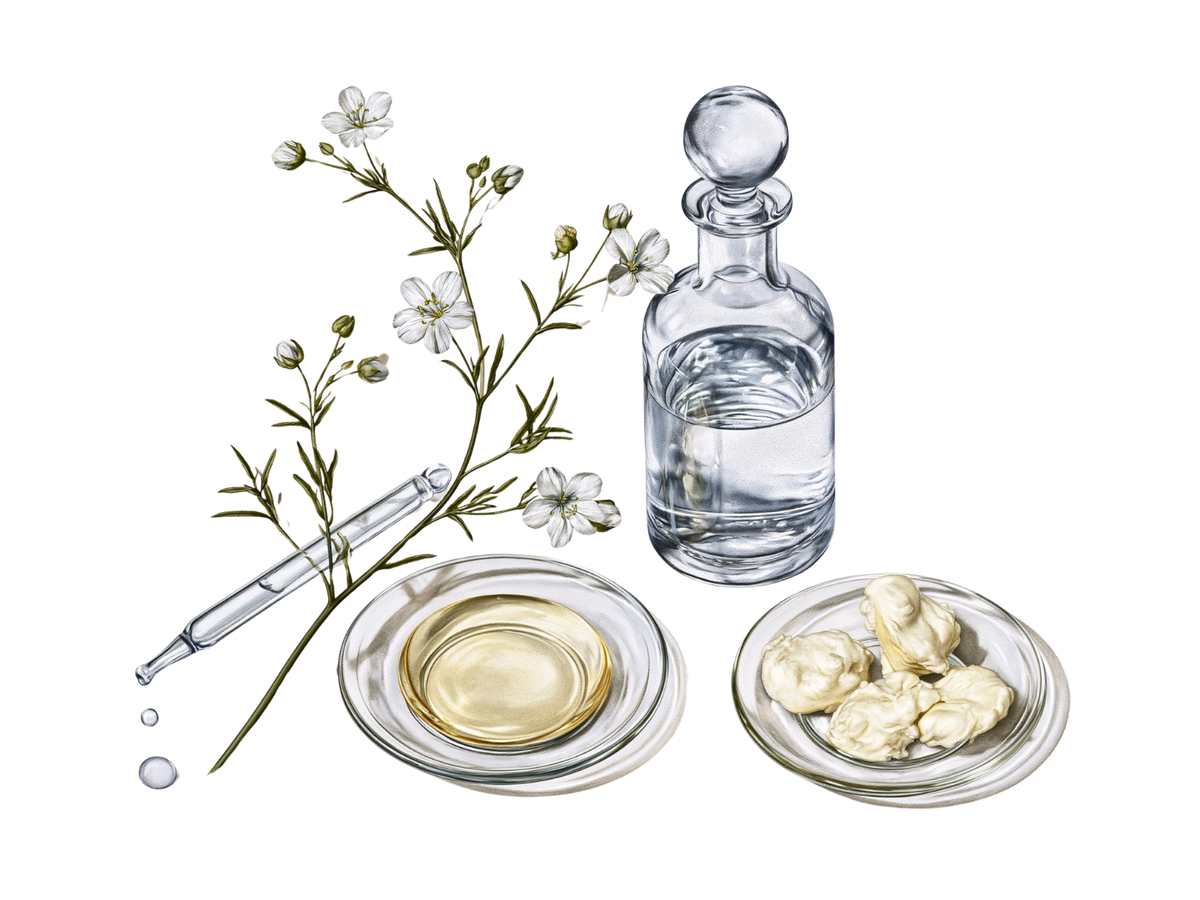
Waterless skincare is attracting plenty of attention, but the idea is far from new. From botanical oils to shampoo bars and solid moisturizers, discover what waterless skincare really means, why people are choosing it, and how it compares with conventional products.
Vol 2 No 009
6-minute read
You may have noticed more skincare products described as waterless lately. Shampoo bars instead of bottles, facial oils instead of creams, and solid moisturizers that look almost too pretty to use.
The idea sounds appealing. Less water, less packaging, perhaps fewer ingredients. But it also raises some perfectly reasonable questions. What exactly is waterless skincare? Is it better for your skin? Does it really make an environmental difference? And why would someone choose a product without water when water is so important to healthy skin?
The interesting thing is that waterless skincare isn't particularly new. What's new is how much attention it's receiving.
Waterless Doesn't Mean Your Skin Goes Without Water
At its simplest, waterless skincare is made without adding water as a main ingredient. Instead, products may be made with plant oils, butters, waxes, powders, or other ingredients that give them their texture and purpose.
Think about a traditional body lotion. Much of what makes it light, creamy, and easy to spread is water, blended with oils and other ingredients. A body oil takes a different approach, relying on oils to soften the skin and help reduce moisture loss.
Neither is automatically better. They're simply different ways of caring for skin.
And despite its name, waterless skincare doesn't mean avoiding water altogether. A shampoo bar still needs water to produce lather and rinse away dirt. A cleansing balm may change texture when water is added. Other products, such as facial oils, are applied without water.
There's another important distinction: waterless skincare isn't the same as keeping skin hydrated.
Your skin needs water to remain comfortable and flexible. Oils and butters can help protect against moisture loss, but they don't replace every function of a water-containing moisturizer.
That difference matters, particularly for someone whose skin feels persistently dry or dehydrated.
An Old Idea With a New Name
Long before anyone called it waterless beauty, people were making and using products that contained little or no water.
Traditional soaps, body balms, lip balms, pressed powders, and botanical oils are familiar examples. Many have been part of personal care for generations.
What's changed is the range of products now being offered in these forms.
Shampoo and conditioner bars have become alternatives to bottled products. Solid moisturizers can be applied directly to the skin. Concentrated cleansers and powdered products offer other ways to avoid adding water until the moment they're used.
Some of these products are genuinely inventive. Others are modern interpretations of something quite familiar.
So yes, waterless beauty has become a trend in the sense that it's attracting attention and influencing what companies create. But the underlying idea is much older and more practical than the trend suggests.
And perhaps that's part of its appeal. Sometimes innovation isn't about discovering something entirely new. It's about reconsidering whether the familiar approach is always the most useful one.
Does Leaving Out Water Make a Better Product?
Not necessarily, although it can create some interesting possibilities.
Without water taking up a substantial portion of a product, there's room for a different balance of ingredients. A body balm, for example, might feel richer than a lotion because its texture comes largely from oils, butters, and waxes.
Some waterless products are also more concentrated, making it possible to package them in smaller containers.
Another consideration is preservation.
Water makes it easier for many bacteria, yeasts, and molds to grow. Removing it can reduce that particular concern, which is one reason certain oil-based products don't require the same preservation approach as conventional lotions.
But waterless doesn't automatically mean preservative-free, and preservative-free doesn't necessarily mean safer. Products used in the shower may come into frequent contact with water, while even a beautifully made facial oil can deteriorate if its ingredients aren't sufficiently protected from air, heat, or light.
Good product design still matters.
So does the experience of using it.
A well-made shampoo bar should cleanse comfortably and rinse away without leaving unpleasant residue. A conditioner bar needs to release enough product to actually condition the hair. A solid moisturizer should soften against the skin rather than feel like rubbing on a candle.
Removing water changes what the maker has to work with. It doesn't remove the need to make something pleasant and effective.
What About the Environmental Benefits?
This is where waterless skincare becomes especially interesting—and where a little perspective is useful.
A concentrated shampoo bar can be smaller and lighter to transport than a large bottle of liquid shampoo. Solid products may also offer opportunities to reduce packaging, particularly plastic bottles.
Those are worthwhile possibilities.
However, a product containing no added water isn't necessarily a product that uses no water to make.
Plants need water to grow. Ingredients must be processed. Equipment needs cleaning. Packaging takes resources to manufacture. And some products still require plenty of water during use.
Even packaging choices involve compromises. Glass is reusable and widely recyclable, but it's heavier to transport. Paper-based packaging may use fewer plastics, but its protective coatings and suitability for recycling deserve attention too.
The environmental picture is larger than any one ingredient or container.
A thoughtfully made waterless product may offer meaningful advantages, especially when concentration, packaging, transportation, and product longevity are considered together.
But those advantages deserve to be evaluated rather than assumed.
Choosing waterless skincare can be part of a more considered approach to consumption. It simply isn't a guarantee of environmental superiority.
So, Should You Make the Switch?
You certainly don't have to replace everything in your bathroom to appreciate waterless skincare.
If you enjoy the lightweight feel of a lotion, there's no reason to abandon it. If your hair responds beautifully to a liquid conditioner, a solid alternative doesn't automatically offer an improvement.
On the other hand, you may discover that a facial oil feels wonderful on your skin, or that a good shampoo bar is more convenient than keeping another bottle in the shower.
At Rowan & Thistle, we've chosen to create waterless skincare because we believe it's a better approach to making the kinds of products we want to offer. It allows us to concentrate on thoughtfully selected botanical ingredients, create products with less unnecessary bulk, and explore packaging that makes better use of resources. These are meaningful advantages to us, and they are central to how we approach skincare.
Ultimately, a product should earn your appreciation through how well it works, how it feels, and whether it suits your needs.
Waterless skincare may be receiving plenty of attention right now, but the thinking behind it is hardly new. It's a thoughtful approach to creating skincare that offers real possibilities for performance, simplicity, and more considered use of resources. Those are qualities worth pursuing long after the latest beauty trend has faded.
Notes & Sources
- U.S. Food & Drug Administration. Microbiological Safety and Cosmetics. Explains cosmetic contamination, preservation, and the importance of protecting products during manufacturing and use. FDA
- U.S. Food & Drug Administration. Shelf Life and Expiration Dating of Cosmetics. Discusses how ingredients, handling, and storage affect product longevity. FDA
- Aguiar, J. B., et al. (2022). Water sustainability: A waterless life cycle for cosmetic products. Sustainable Production and Consumption, 32, 35–51. Examines water use throughout the cosmetic product life cycle and potential advantages of waterless formats. Research article
- A Sustainable Life Cycle for Cosmetics: From Design and Development to Post-Use Phase (2023). Reviews environmental considerations across cosmetic ingredients, production, packaging, and disposal. Research article
Continue Exploring
From the Rowan & Thistle Journal
- What Does Oil Actually Do for Your Skin?
- Why Does My Skin Still Feel Dry After Using Body Oil?
- Why Do Some Botanical Oils Stay Fresh Longer Than Others?
Explore Rowan & Thistle
- Botanical Body Oils
- Shampoo & Conditioner Bars
- The Herbarium — Discover the ingredients behind our products