

The Journal
Body Oil vs Lotion: What's the Real Difference?
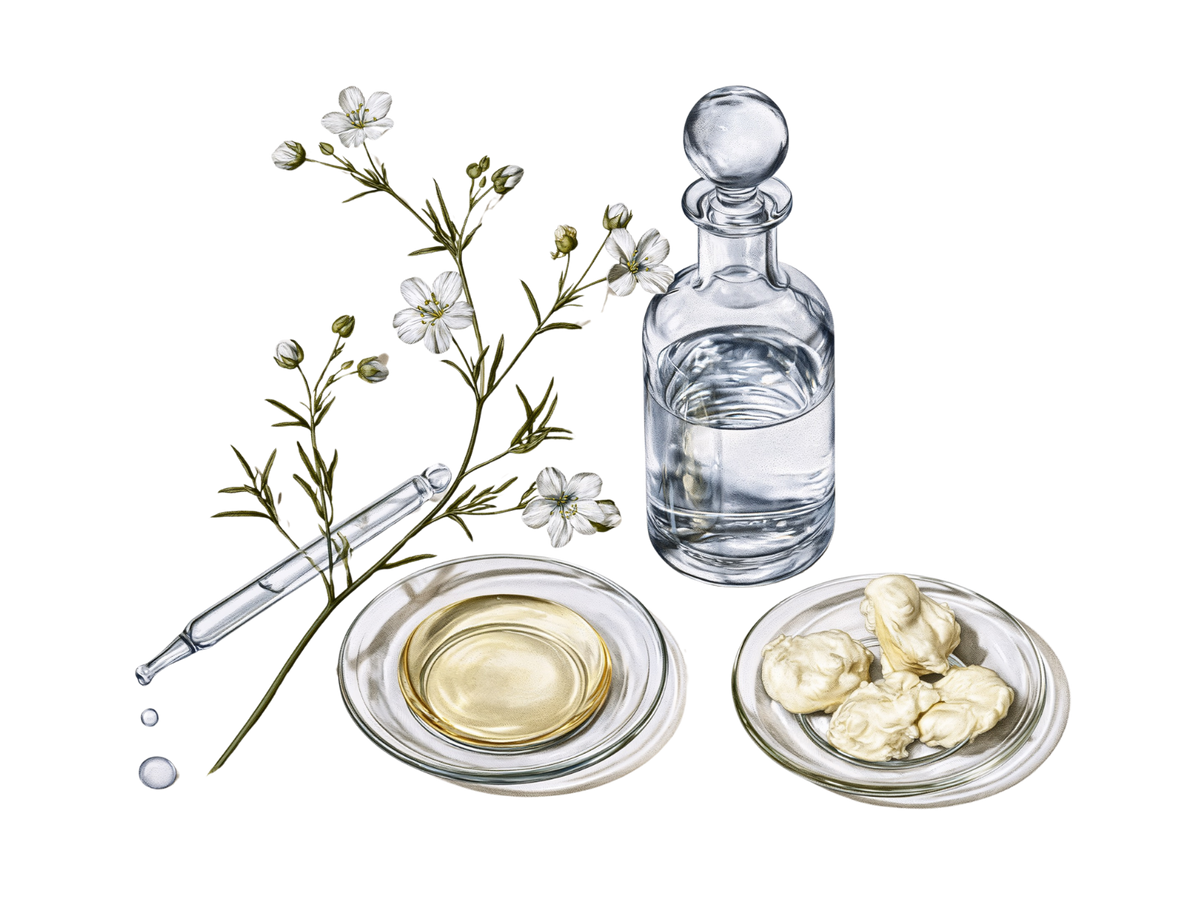
Body oil and lotion can both leave skin softer, but they do not do exactly the same job. Here is how water, oils, humectants, and texture change what each format brings to dry skin.
Vol 2 No 003
Estimated reading time: 5 minutes
There is a familiar moment after a shower when dry skin makes itself known. Your arms look a little dull, your shins feel tight, and you reach for something that will make them feel comfortable again. Then comes the choice: lotion or body oil?
They are often treated as interchangeable, but they are not really doing the same job. A lotion usually brings water and oil together in one formula. A body oil usually contains no added water at all. That difference changes how each product feels, how it is formulated, and what it can realistically do for dry skin.
Lotion brings water with it
Most body lotions are emulsions: mixtures of water and oil held together with an emulsifier. The water phase gives the formula its lighter feel and allows it to include water-loving ingredients such as glycerin, a humectant that helps the outer layer of skin hold onto water. The oil portion adds softness and can help slow evaporation.
That combination is useful because dry skin is, at its core, skin that does not have enough water in its outermost layer. A well-made lotion can address that from more than one direction at once: supplying water, helping the skin retain it, and leaving emollient ingredients behind so the surface feels smoother.
This also explains why lotion formulas tend to have longer ingredient lists than a simple body oil. Water and oil do not stay mixed on their own, so emulsifiers are needed. Once water is present, protection against microbial growth becomes important, which is why properly formulated lotions generally require a preservation system. Preservatives are not filler; they are part of making a water-containing cosmetic safe to use over time.
Body oil works differently
A traditional body oil is anhydrous, meaning it is made without added water. Instead, it is built from oils and other oil-soluble ingredients.
That makes body oil very good at what oils naturally do on skin: soften, smooth, reduce roughness, and leave behind a lipid layer that can slow some of the water escaping from the skin’s surface. In other words, oil can help keep water from leaving as quickly—but it does not bring water to the skin in the first place.
This is where a phrase like “body oil hydrates the skin” can become misleading. In ordinary beauty language, hydration and moisturization are often used interchangeably. Technically, however, an oil is not a source of water. If skin is already comfortable and well hydrated, oil may be all someone wants. If skin is very dry because its water content is low, a water-containing lotion or cream may do more of the work on its own.
The familiar advice to apply body oil after bathing makes sense for this reason. Freshly bathed skin has water available at the surface. Applying oil while the skin is still slightly damp can help slow the loss of some of that water as it evaporates.
Why one can feel better even when the other is doing more
Texture complicates the comparison.
Lotions often disappear quickly and leave little residue, which can make them pleasant for daytime use, warm weather, or anyone who dislikes an oily finish. Body oils vary enormously. Some plant oils spread thinly and absorb with a dry, silky feel; others remain richer and more noticeable on the skin.
That sensory difference matters because the product you enjoy using is usually the product you will actually use. But feel alone does not tell you which product is delivering more moisture.
A light lotion can contain a great deal of water while feeling almost weightless. A rich-feeling oil may make skin feel beautifully supple while contributing no water at all. Neither sensation tells the whole story.
The ingredient list matters too. A lotion may include humectants, emollients, occlusives, preservatives, fragrance, or botanical extracts. A body oil may be a single oil or a blend of several oils chosen for different textures and fatty-acid profiles. Neither format is automatically simpler, gentler, more natural, or better for sensitive skin because of the format alone.
So which belongs on your skin?
For mildly dry skin, a lotion may be enough by itself – particularly if you use it regularly. If you want something quick, light, and easy to spread over a large area, lotion may be the more convenient format.
If you mainly want softness, slip, and a more concentrated oil-based finish, body oil may make more sense. It can be especially satisfying after bathing, when there is already water on or within the outer layers of skin.
Sometimes the most useful answer is not either/or. Someone with very dry skin may prefer a lotion or cream first and an oil afterward, particularly on shins, elbows, or hands that lose comfort quickly. Someone else may use lotion in winter and oil in summer, or the reverse, as climate and personal preference change.
For very dry skin, dermatologists often recommend creams or ointments rather than light lotions because heavier formats generally reduce water loss more effectively. That is also a reminder that “oil versus lotion” is only part of the moisturizing spectrum.
The real difference is what each formula brings
Body oil and lotion can both leave skin feeling softer, but they arrive there by different routes.
Lotion usually combines water with ingredients that help attract, hold, and slow the loss of that water. Body oil brings lipids instead: ingredients that soften the skin and can help reduce evaporation from the surface.
That difference is less dramatic than declaring one format better, but it is more useful. Once you know what each product is actually contributing, choosing between them becomes less about marketing language and more about what your skin—and your preferences—need that day.
Notes & Sources
DermNet — Emollients and Moisturizers. Overview of moisturizer formats, including oils, lotions, creams, humectants, emollients, occlusives, and the role of preservatives in water-containing formulas.
American Academy of Dermatology — How to Pick the Right Moisturizer for Your Skin. Dermatologist guidance on differences among lotions, creams, ointments, and the importance of retaining water in dry skin.
U.S. Food & Drug Administration — Microbiological Safety and Cosmetics. Guidance on microbial contamination and the importance of effective preservation in cosmetic products.
Draelos ZD. Vehicles for Drug Delivery and Cosmetic Moisturizers: Review and Comparison. Review of lotion and moisturizer formulation, including typical water, oil, humectant, and emollient components.
Continue Exploring
What Does Oil Actually Do for Your Skin?
Why Do Some Oils Absorb Quickly While Others Feel Greasy?
Why Isn’t Every Facial Oil Just One Ingredient?
Explore Rowan & Thistle Body Oils